




Why You Won't Find a Rate Listed Here
Most lenders publish a rate table. A 30-year fixed at one number, a 15-year at another, an asterisk or two.
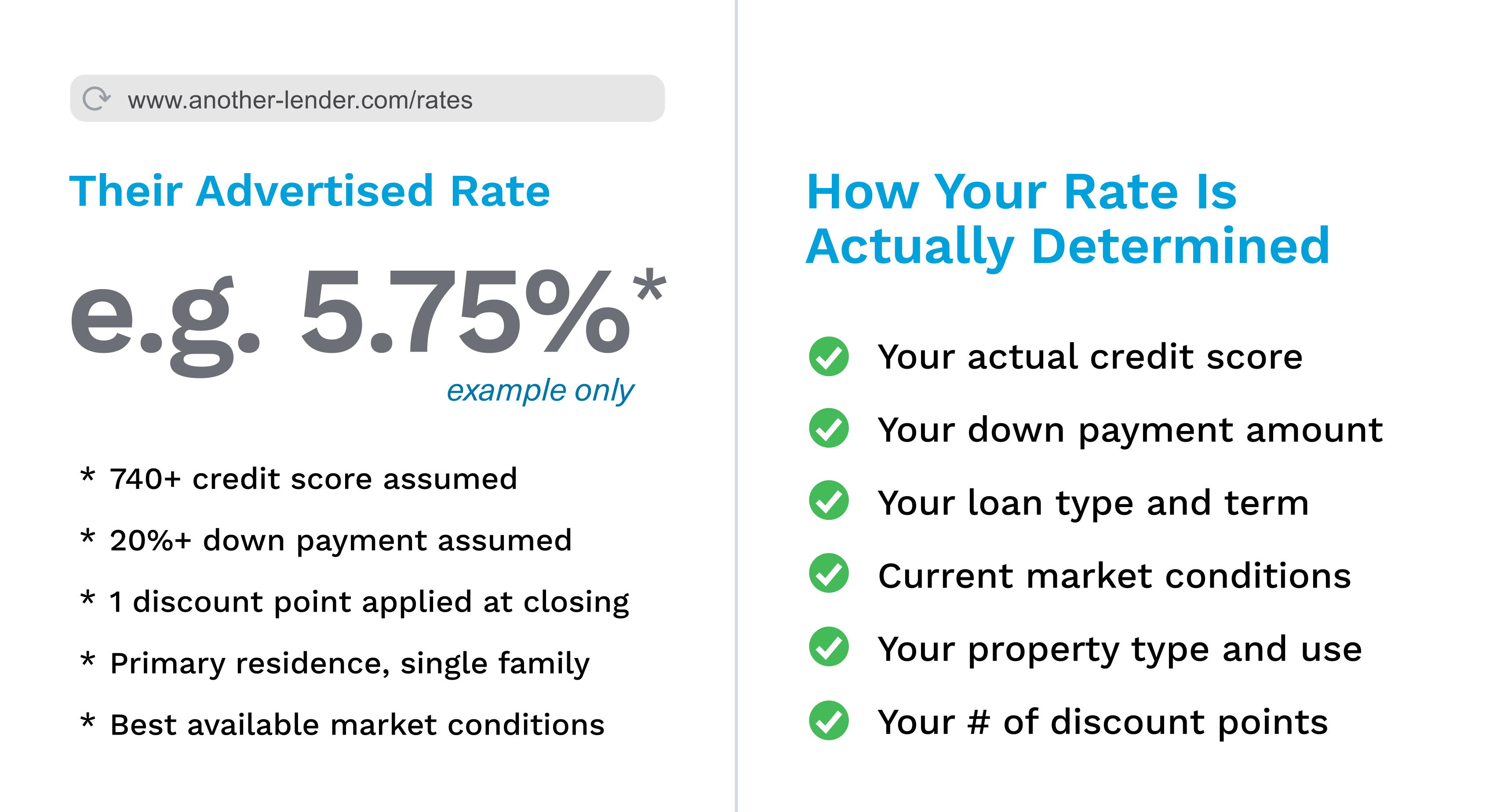
Those numbers are real. But they almost certainly don't describe your loan. They may reflect an idealized borrower: excellent credit, a large down payment, sometimes points paid at closing to buy the rate down. Those asterisks are doing a lot of work.
Thompson Kane doesn't publish specific rates, and it comes down to two things we take seriously: honesty and your time. When a loan officer quotes you a rate based on your actual profile, that number is grounded in reality, not a best-case scenario built for a homepage.
It's also worth saying plainly: we're competitive, and we don't need an asterisk to prove it. The difference is what the number means. A quote from Thompson Kane is a rate for your loan, built from your file, that your loan officer is prepared to stand behind.
That low rate you saw on another lender's website? It was likely calculated for a borrower with a high credit score, a 20% down payment, and added fees (points) paid at closing to buy down the rate. Your rate is built from your actual numbers. Here's the difference.
Where to Find Today's Market Rates
For a reliable, independent snapshot of where rates are on any given day, the best resource is the Freddie Mac Primary Mortgage Market Survey, published every Thursday at freddiemac.com. It's the most widely cited benchmark in the country, drawn from thousands of real loan applications nationwide, and covers 30-year and 15-year fixed-rate mortgages.
Think of it as a baseline. Where you land relative to that number depends on the factors below.
What Determines Your Rate
Your rate is the result of several variables, each of which shifts the number up or down.
Credit Score. One of the biggest drivers. Higher scores earn more favorable pricing, and the premium grows in steps as scores decline. Even a difference of 20 or 30 points can move your rate enough to change your monthly payment for as long as you hold the loan.
Down Payment. A larger down payment lowers your loan-to-value ratio, which reduces the lender's risk and usually earns you a better rate. It can also eliminate private mortgage insurance (PMI), a monthly cost added to most conventional loans when the down payment is below 20%. PMI protects the lender, not you, so removing it as quickly as possible is generally in your interest.
Loan Type. Conventional, FHA, VA, and USDA loans each carry different rate dynamics. VA and USDA loans often come in below conventional market averages because of their federal backing. FHA loans are frequently the most accessible for buyers with lower credit scores or smaller down payments.
Loan Term. A 15-year mortgage typically carries a lower rate than a 30-year, with higher monthly payments. Whether a shorter term makes sense depends on your cash flow and long-term plans.
Discount Points. Points are an upfront fee paid at closing to reduce your rate. One point equals 1% of the loan amount. This is one of the most common ways advertised rates mislead: a competitor's headline rate may already assume you've paid a point or two to buy it down. Your loan officer can tell you whether paying points makes sense for your situation.
Market Conditions. Rates move with broader economic forces: Federal Reserve policy, Treasury yields, and inflation data. They can shift meaningfully from week to week. A number on a website last Thursday may not be today's rate.
Rate vs. APR
The interest rate is the cost of borrowing the loan principal. The APR (annual percentage rate) folds in lender fees and other costs to give you a more complete picture of what the loan actually costs per year. Two loans with identical interest rates can have meaningfully different APRs depending on what the lender charges. When comparing offers, APR is the more useful number.
Protecting Your Rate Before Closing
The period between applying for a loan and closing on your home can span several weeks. During that time, market conditions can shift, and so can rates. A rate lock is an agreement with your lender that holds your quoted rate for a defined period, typically 30 to 60 days, regardless of what the market does in the meantime.
When to lock is a judgment call. It depends on your timeline, your loan, and where the market is heading, and it's one of the first things worth discussing with your loan officer once you're under contract or your application is in.
The Only Rate that Matters Is Yours
Your loan officer looks at the full picture: credit, income, the property, the loan type, and where the market sits that day. What comes back isn't an estimate built around a stranger's financials. It's a real number for a real loan.
Frequently asked questions
How often do mortgage rates change?
What's the difference between a fixed rate and an ARM?

