
Thompson Kane's mortgage experts stay ahead of shifting housing market trends so you don’t have…
Should You Pay Off Debt Before Buying a House?
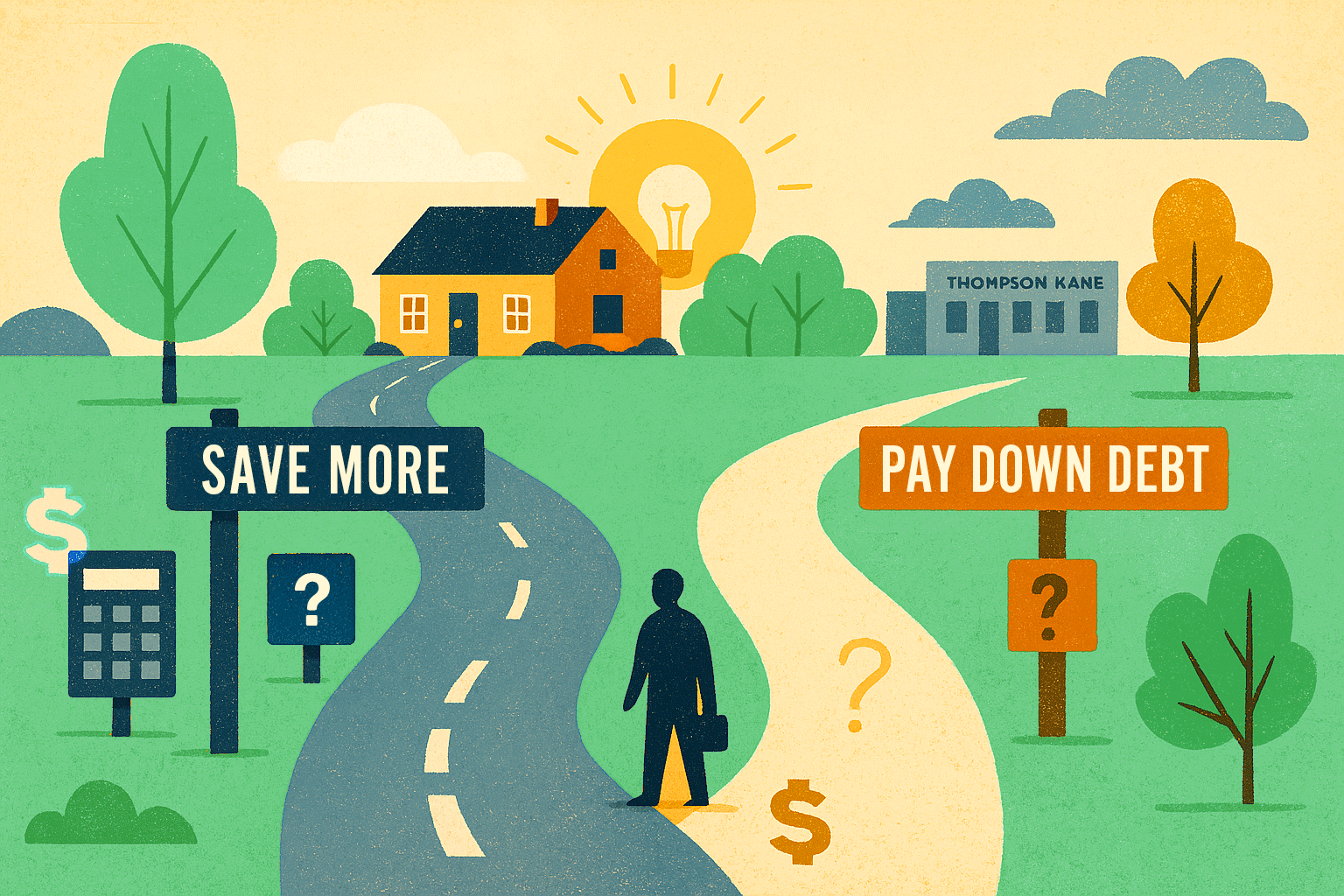
Weighing down payment goals against debt reduction in your mortgage strategy.
If you’re thinking about buying a home and wondering whether to pay off debt first or save for a down payment, you’re not alone. It’s one of the most common financial questions our Thompson Kane lending team receives—and for good reason. How you manage your current debt can shape your home loan eligibility, mortgage rate, and overall financial readiness.
How Debt Affects Your Home Loan Approval
Your existing debt plays a central role in how much home you can afford. Lenders use a formula called your debt-to-income (DTI) ratio to assess your monthly obligations compared to your income. A high DTI may limit your loan options, while a lower one can open more doors. Paying off debt before buying a home could improve your DTI ratio—but it’s not always the best move for everyone.
For some buyers, allocating funds toward a down payment or keeping cash reserves may offer more immediate benefits. That’s why it’s critical to evaluate your full financial picture before committing to one strategy over another.
Prioritize Based on Loan Program Requirements
Different mortgage programs have different guidelines. For example, FHA loans are more flexible about DTI than conventional loans, while VA loans have unique allowances for veteran buyers. Understanding these nuances is where our experienced loan officers can be an asset. We help borrowers weigh debt reduction goals against loan program requirements to maximize approval chances without draining critical savings.
Some borrowers may benefit more by maintaining a certain level of liquidity—especially if those funds can help them avoid private mortgage insurance (PMI) or qualify for a better rate with a larger down payment.
Which Debts Might Make Sense to Pay First?
If you’re leaning toward paying down debt before buying a home, start by targeting the balances that weigh heaviest on your monthly budget. High-interest credit card debt is a common culprit. Not only can it inflate your DTI, but it can also drag down your credit score.
Auto loans or student loans with manageable monthly payments may be less urgent to address unless you’re right on the edge of qualifying. A strategic review with a mortgage expert can help determine which debts, if any, are worth eliminating before applying for your loan.
Saving vs. Paying Off Debt: A Balancing Act
In many cases, a balanced approach is ideal. You don’t necessarily need to be debt-free to qualify for a home loan—but you do need to be financially stable and well-positioned. That may mean saving enough to cover closing costs, an emergency fund, and a competitive down payment, while still keeping certain debts under control.
One tip: Use a simple mortgage payment calculator to estimate how much home you can afford based on different debt levels. Then talk it through with a loan advisor to get the full picture of how those numbers translate into real-world approval terms.
Talk to a Loan Officer Before Making Major Moves
Before using your savings to pay off debt, speak with a lending professional. What looks like a financially responsible move might actually reduce your mortgage readiness if it leaves you without enough for your down payment or closing costs. Our Thompson Kane loan officers can help you map out the smartest path forward based on your goals, timeline, and financial profile.
Ultimately, deciding whether to pay off debt before buying a home is a personal decision—but it’s one best made with expert insight tailored to your situation.
Let’s Find the Right Balance Together
Every homebuyer has a unique financial picture, and at Thompson Kane, we specialize in helping buyers turn that picture into a confident plan. If you’re unsure whether to pay off debt before buying a home, don’t guess. Reach out to one of our mortgage experts to get clarity and take the next step with confidence.

Related Posts


